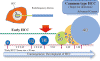
 Radiofrequency ablation (RFA) is a treatment technique that uses high-frequency alternating electrical current to destroy tissue cells by heating them.
Unfortunately, RFA is not helpful for the comprehensive treatment of systemic blood cell cancers, or metastatic cancers of other types ... in most clinical circumstances. It might be used as part of immunotherapy however, or as a palliative measure to treat individual tumors.
"RFA has a very low complication rate. Studies of the technique report complications in only 1 percent to 4 percent of patients, depending on the type of disease treated and the overall health of the patient."
The safety and effectiveness of RFA is well known and the technology has been approved by the Food and Drug Administration (FDA). Countless patients with a variety of medical problems have been treated with the technique. 2
Here we propose that RFA be applied to investigational and compassionate use of lymphomas for two reasons:
-
To safely manage the disease in the palliative or watchful waiting setting;
-
To explore the potential of RFA to induce immune responses against tumor antigens
as described in the background section within - possibly in combination with immune adjuvants.
Rationale: Patients diagnosed with indolent lymphomas are often advised to watch and wait (w&w) until symptoms, disease progression, or disease location makes treatment necessary. The rationale for monitoring is based on findings that overall survival is not improved by early use of standard chemotherapy (Horning et al).
However, many patients are unhappy with monitoring indolent lymphoma, understanding that the disease could be progressing, even if slowly, and possibly accumulating dangerous mutations. Furthermore lymphoid tumors that otherwise do not require therapy can present in the face and neck, which can affect social and career functioning; and have a significant impact on quality of life.
It should be noted that the main rationale for monitoring indolent lymphomas is the toxicity of standard therapies - that can narrow the range of subsequent treatment options - is rarely curative.
Importantly, RFA is unlikely to preclude optimal benefit from future standard treatments when used to treat an unsightly or bothersome nodal lesion when disease monitoring is otherwise indicated. Low-risk RFA could lead to fast-acting resolution on the tumor, with the added potential of inducing systemic immune activation against the disease. In short, judicious use of RFA could improve quality of life and well-being of people who live with this life-threatening disease.
For the patient there appears to be little to lose from RFA, except an unsightly/troubling nodal lesion. Radiotherapy can do the same, but patients have concerns about mutagenic risk to surrounding tissue. That treatment with RFA could lead to immune recognition of tumor antigens is an additional potential benefit. ...
Therefore we urge the investigational and compassionate use of RFA for patients with lymphomas who are in watchful waiting status or in need of safer palliative treatments.
"Ablation is a medical term that refers to any procedure performed to destroy diseased or damaged tissue in the body. Catheter ablation is a technique in which a thin tube, or catheter, is inserted through the skin or threaded through the blood vessels to the site of disease. Extreme heat or cold, alcohol, chemotherapy drugs or other therapies are delivered through the catheter to the diseased tissue." - www.sirweb.org
"An additional approach under investigation by the Engleman lab involves intratumoral injections of naïve DCs into tumors that have been treated with either radiofrequency ablation or photodynamic therapy. The latter therapies are effective locally but not systemically, and importantly, in tumor bearing mice the combination of either treatment with intratumoral DCs can be curative." http://cancer.stanford.edu/research/immunology/dendritic.html
Radiofrequency Ablation of Lymphoma - ASCO 2005
"These cases of chemo resistance, pain palliation, and pending airway compromise illustrate settings in which RFA may be a preferable treatment to radiation or surgery, producing potentially less morbidity than standard treatments. Previous studies have shown that RFA produces a robust inflammatory response and could lead to a boost in the immune response against lymphoma, especially when performed with co stimulatory agents like vaccines or other immuno-stimulation. This study exemplifies ways in which RFA may help manage patients with lymphoma and few alternative therapies."
Activation of Tumor-specific T Lymphocytes by Radio-Frequency Ablation of the VX2
Hepatoma in Rabbits1 - http://cancerres.aacrjournals.org/cgi/content/full/63/19/6496
"Therefore, in addition to destroying tumor tissue, RFA induces an immune response against tumor antigens that may be exploited in multimodal antitumor strategies."


