Immune suppression is a known risk factor for developing lymphomas based on the higher incidence of lymphoma in persons receiving drugs to prevent rejection of transplanted organs from donors.
It's also a known consequence of disease progression. The tumor cells seem to make substances that dampen or distort immune function, or the malignant cells may accumulate in organs involved in immune cell development or maturation, such as the bone marrow, spleen, lymph nodes.
Immune suppression is also a common side effect of standard treatments, an effect with is generally reversible with time.
See also The Immune System Cancer.gov
Resources:
[J Nephrol. 1997
Incidence and consequences of post-transplant lymphoproliferative disorders http://1.usa.gov/O6vumn
National Cancer Institute
The Immune System and Cancer - http://1.usa.gov/1fttTgv
{beta}2-microglobulin -[associated with NHL progression] as a negative regulator of the immune system: high concentrations of the protein inhibit in vitro generation of functional dendritic cells. Blood. 2003 Jan 16 PMID: 12531797 PubMed
Th1/Th2 cytokine expression and its relationship with tumor growth in B cell non-Hodgkin's lymphoma (NHL). Leuk Lymphoma. 2002 Jun;43(6):1313-21. PMID: 12153001 PubMed
The Prevalence of Blastocystis Hominis in Immunosuppressed Patients
ams.cu.edu.tr
Treatment-related immune suppression
Pure red cell aplasia due to parvovirus following treatment with CHOP and rituximab for B-cell lymphoma. Br J Haematol. 2002 Oct;119(1):125-7. PMID: 12358915 PubMed
Frequency and type of serious infections in Fludarabine-refractory B-cell chronic lymphocytic leukemia and small lymphocytic lymphoma: implications for clinical trials in this patient population. Cancer. 2002 Apr 1;94(7):2033-9. PMID: 11932906 PubMed
Epstein-Barr virus-positive B-cell lymphoproliferative disorders arising in immunodeficient patients previously treated with fludarabine for low-grade B-cell neoplasms. Am J Surg Pathol. 2002 May;26(5):630-6. PMID: 11979093 PubMed
Infection-
related Immune-dysfunction
B-cell lymphomas involving the skin associated with hepatitis C virus infection. Int J Dermatol. 2002 Sep;41(9):577-82. PMID: 12358827 - PubMed


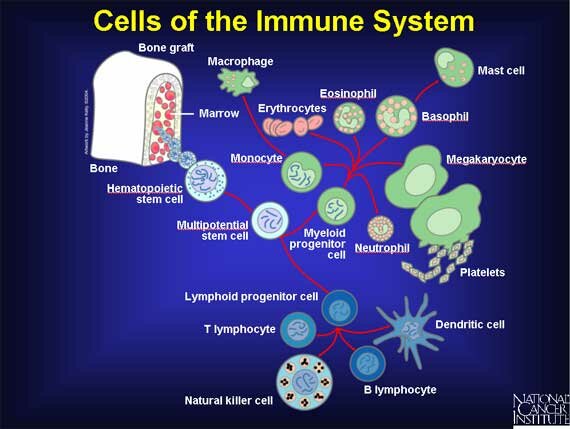
.gif)