|
TOPICS
TIPS: Speak Up Quickly | Report Possible Mistakes in a Nice Way | Prescription checklist
Office, Hospital and Pharmacist checklist | Related Resources
Our PDF brochure - print and share
|
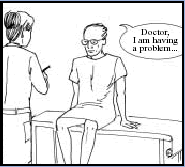 Medical errors occur not only in hospitals but in other health care settings, such as physicians' offices, nursing homes, pharmacies, urgent care centers, and care delivered in the home. Medical errors occur not only in hospitals but in other health care settings, such as physicians' offices, nursing homes, pharmacies, urgent care centers, and care delivered in the home.
“A 2001 Institute of Medicine (IOM) report found that U.S. health care was insufficiently safe, effective, patient-centered, efficient, timely, or equitable.
It also noted that preventable medical errors caused an estimated 44,000 – 98,000 inpatient hospital deaths per year.” rwjf.org
TIPS
SPEAK UP QUICKLY
Don't hesitate to let the doctor know you aren't getting better and/or you are getting worse
REPORT POSSIBLE MISTAKES IN A NICE WAY
Try not to insult the people that are caring for you in the process … No one can be perfect every minute of every day. Mistakes will happen. We are all human.
Minimizing Your Risk PARTICIPATE IN YOUR CARE
.gif) |
Learn about your medical condition and the treatments from reputable sources.
|
|
When you have questions, ask; prepare a written list and copies.
|
|
Communicate honestly about your medical history, symptoms,
and relevant life style practices.
|
|
Bring a trusted friend or loved one to your medical consults
|
|
Be polite, but persistent – anyone can make mistakes
|
PRESCRIPTION CHECKLIST:
|
Prepare a written list of all prescription drugs, over the counter medications, and
supplements; give a copy for your doctor and the pharmacist.
|
|
Ask your doctor to review your medications at least twice a year.
Prepare a list of allergies and secondary conditions; give a copy to your doctor and pharmacist.
Make sure you can read the prescription and the dose.
|
|
Ask why a medication, test, procedure, or surgery is being prescribed.
|
|
Ask your doctor, nurse, & pharmacist:
|
What is the name of medication?
|
|
What is it for?
|
|
What are the most common side effects?
|
|
What should be done if side effects occur?
|
|
Is this medication safe to take with the other medications and supplements I take?
(Provide list)
|
|
What foods, drink, or activities should be avoided when I take this medication?
|
|
OFFICE, HOSPITAL & SURGERY CHECKLIST
|
Start with an accurate diagnosis – medication for the wrong illness can be dangerous.
|
|
Identify the person in charge of overseeing your care.
|
|
Obtain a written list of your medications and doses … … then ask for the
name of the medication,
the dose,
the person it’s intended for,
before accepting it – including IV medications.
|
|
Make sure that all persons treating you know your medical condition, history, and identity.
|
|
Make sure that the procedure or surgery you are receiving is intended for you.
|
|
Make sure all persons who contact you, or items you use, have washed their hands – even if
they wear gloves Get a second opinion for medical procedures, particularly high-risk treatments or surgery.
|
|
Before surgery, ask: What precautions will be taken to ensure right-site surgery?
|
In the News and Related Resources
|
KevinMD: Have a safer hospital stay: Use a checklist http://bit.ly/11H4rBb
|
|
Beth Fillman: Your Test Results and HIPAA - rules and tips PAL
PAL believes that receiving a copy of your test results can reduce the risk of medical errors because it puts the medical providers on notice that you are paying attention to your care; and that you may share the results with other medical professionals.
|
|
PAL: Medication organizer with common causes of medication errors PDF
|
|
Stay safe in the ER with life-saving strategies
As many as 98,000 Americans die every year as a result
of medical mistakes http://on.msnbc.com/ndPaJm
|
|
By PAL: Download and print:
|
Symptoms checklist PDF
|
|
Tips to Keep safe and minimize Medical Errors PDF
|
|
Medication organizer with common causes of medication errors PDF
|
|
Medication Checklist by PAL PDF
|
|
|
Ways You Can Help Your Family Prevent Medical Errors! ahrq.gov
|
|
PAL's Tips to Keep safe and minimize Medical Errors - a printable brochure PDF
|
|
Medical Error: Measuring quality http://www.ahrq.gov/qual/
|
|
Minimizing Medical Errors - A Patient’s Guide strategicvisionsinc.com pdf
|
|
Improving Quality and Safety
Despite some progress, the nation still faces an urgent need to build a less error-prone system that delivers better care.
“A 2001 Institute of Medicine (IOM) report found that U.S. health care was insufficiently safe, effective, patient-centered, efficient, timely, or equitable. It also noted that preventable medical errors caused an estimated 44,000 – 98,000 inpatient hospital deaths per year.”
http://www.rwjf.org/
|
|
See also SearchMedic
|
|

