|
Treatments > Radiotherapy
Last update: 08/10/2017
|
|
TOPICS
Introduction | Common Side Effects | Find Radiation Oncologist | Question to Ask |
Background and Glossary : Types | Dosing | Effective NHL Treatment Info | Radiation Risks | Treating Localized Disease
Low and Fractionated Dosing | Resources & Research News | Radioimmunotherapy - Bexxar/Zevalin | In the News
 TOPIC SEARCH: TOPIC SEARCH:
Review | Therapies | Prognosis with Rituxan Review | Therapies
Central lymphatic irradiation in follicular lymphomas PubMed
Treatment of localized (stage I/ II) Lymphoma Survival
Clinical Trials using radiotherapy ClinicalTrials.gov
Radiotherapy (radiation treatment) uses high-energy x-rays to kill tumors. Since radiotherapy affects the areas radiated, it can be effective as a management intervention -- when there is a need to shrink a problem lymph node, for example. Radiotherapy is sometimes combined or sequenced with chemotherapy.
"The goal of treatment may be curative or palliative [management]. If radiotherapy is potentially curative, the length of treatment is often longer and usually consists of smaller daily doses over a longer period of time. This approach minimizes late side effects. If treatment is intended to be strictly palliative, shorter treatment schedules consisting of larger daily treatment doses over a shorter time period are used. In such cases, late side effects are not likely to occur within the patient's lifetime. Furthermore, a shorter treatment program will negatively affect less of the patient's remaining life." aafp.org
Importantly, radiotherapy can be curative [1] when the patient's lymphoma is diagnosed early in it's clinical course (stage I and II) and the disease is still localized.
Radiation therapy for follicular Lymphoma:
... "should be used in patients with stage I disease, although this represents a minority of cases of follicular lymphoma.
Radiation therapy also can be used to treat localized or bulky lymphadenopathy that is causing obstruction or when a more urgent response is desired to relieve obstruction.
Radiation therapy usually is tolerated well and, in many instances, can spare the patient the need for additional chemotherapy. The radiation oncologist is also involved in the care of patients receiving radioimmunotherapy." Source: emedicine.medscape.com
Radiation Fields
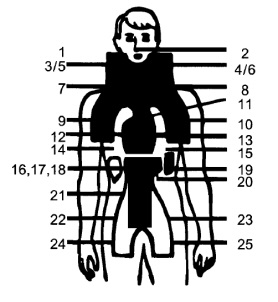
Click to open source site.
Find a Radiation Oncologist Near You
.gif) |
http://doctor.webmd.com/find-a-doctor/radiation-oncology (fixed 4/25/14)
|
Questions To Ask Your Radiation Oncologist
|
http://tcrc.acor.org/radquest.html (fixed 4/25/14)
|
Managing Common Side Effects
|
aquaphor for burns? jdr.iadrjournals.org
|
|
Radiation side effects and how to manage them Cancer.gov
|
More Resources on Side Effects
|
General Side Effects of Radiotherapy cancerbackup.org.uk | cancerhelp.org.uk
|
|
Health Phys. 2012 Harald Paganetti
ASSESSMENT OF THE RISK FOR DEVELOPING A SECOND MALIGNANCY FROM SCATTERED AND SECONDARY RADIATION IN RADIATION THERAPY http://1.usa.gov/1p10xyf
“low doses delivered far outside the main field have also been associated with second malignancies (Ron et al. 1988).”
Comment: The benefits of radiotherapy can exceed the risks in many settings - when treatment is indicated. Of concern would be the use of radiotherapy, even low doses, when other options have equivalent potential (especially younger patients), such as in untreated indolent lymphoma. (Karl)
|
Resources - Basic Information and REPORTS
Recently added:
|
Value of low-dose 2 x 2 Gy palliative radiotherapy in advanced low-grade non-Hodgkin's lymphoma. http://bit.ly/2vjteAY
|
|
Efficacy of palliative low-dose involved-field radiation therapy in advanced lymphoma: a phase II study. http://bit.ly/2up8dpF
|
|
Annals of Oncology (full text)
X. When should radiotherapy be used in lymphoma?
http://bit.ly/2vF46Wb
|
Recommended background resources
|
NCI Guidance: Radiotherapy and You Cancer.gov | PDF
|
|
NCI Radiation Therapy Fact Sheet Series Cancer.gov
|
|
When to Consider Radiation Therapy for Your Patient aafp.org
Bernard A. Tisdale, M.D. ~ Chippenham Medical Center and Johnston-Willis
Hospitals, Inc. Richmond, Virginia
|
|
Radiation Oncology/NHL/Treatment high grade wikibooks.org
From Wikibooks, the open-content textbooks collection
|
|
Basic information
aafp.org | CancerBACUP | CancerIndex | MedlinePlus | National Cancer Institute
|
|
Radiotherapy dosing and methods for spot (localized) treatment of lymphoma
TOPIC SEARCH: PubMed
|
|
Radiat Oncol. 2012; 7: 103
Radiotherapy alone for stage I-III low grade follicular lymphoma: long-term outcome and comparison of extended field and total nodal irradiation http://1.usa.gov/1172wJz
Author's conclusion: Radiotherapy alone for stage I and II follicular lymphoma was an effective and curative treatment with high rates of disease control. Larger irradiation fields covering both sides of the diaphragm did not improve tumor control and overall survival. Additionally, TNI was associated with increased rates of acute and chronic toxicity. Based on this study and data from the literature, EFI or IFI are the preferred treatments for stage I and II follicular lymphoma. In patients with stage III FL, TNI resulted in promising tumor control and overall survival and should be considered as a potentially curative treatment option.
|
|
Multi Media Presentations on Radiation Protection &
Radiation Safety Training 
Excellent explanation of dosing, effective dose, etc., with animations. Added to radiotherapy and CT safety topics.
|
|
Oncolink: Pictorial Overview of the Radiation Therapy Process
|
|
FL, early stage - Strahlentherapie Und Onkologie:
Radiotherapy in stage I-III follicular: Retrospective analysis of a series of 50 patients
|
|
Background on involved field radiotherapy in Hodgkin's lymphoma
|
|
Early stage FL with involved field radiation - in combination with Rituxan
|
|
Medscape: Hyperbaric O2 Helps Most Chronic Radiation Injuries: Study
A positive outcome occurred in
94% of patients with osteoradionecrosis of the jaw (n = 43),
76% of patients with cutaneous radionecrosis that caused open wounds (n = 58),
82% of patients with laryngeal radionecrosis (n = 27),
89% of patients with radiation cystitis (n = 44),
63% of patients with gastrointestinal radionecrosis (n = 73), and
100% of patients who were treated in conjunction with oral surgery in a previously irradiated jaw (n = 166).
Source
|
|
Improved survival in patients with early stage low-grade follicular lymphoma treated with radiation therapy (RT) http://bit.ly/cHNXNh
N = 6,568. Overall Survival at 5, 10, 15, and 20 years in the RT group was 81%, 62%, 45%, and 35% versus 71%, 48%, 34%, and 23% in patients not receiving RT. RT for early stage low-grade follicular lymphoma is greatly underused in the US population; increased use of upfront RT could prevent thousands of deaths from lymphoma in these patients.
Common Side Effects of radiotherapy
"Radiation Therapy is in itself painless. Many low-dose palliative treatments (for example, radiotherapy to bony metastases) cause minimal or no side effects." wikipedia.org
|
Skin changes may include dryness, itching, peeling, or blistering
|
|
Nausea, diarrhea, urinary problems - for radiation therapy to the pelvis, stomach, and abdomen **
|
|
Dryness (salivary and tear glands have a radiation tolerance of about 30 Gy in 2 Gy fractions) *
|
|
Hair loss in radiated area
|
|
Fibrosis - decrease in elasticity to radiated tissue
|
|
Tiredness (anemia)
|
|
Low blood counts (if location radiated affect the bone marrow)
|
|
Swelling (edema or Oedema)
|
|
Infertility (if radiated areas includes gonads (ovaries and testicles), which are very sensitive to radiation
|
|
Secondary Cancer (delayed)
Note: Secondary malignancies are seen in a very small minority of patients, generally many years after they have received a course of radiation treatment. In the vast majority of cases, this risk is greatly outweighed by the reduction in risk conferred by treating the primary cancer. *
|
* Source: wikipedia.org
** Source: cancer.gov
|
|
A systematic overview of radiation therapy effects in non-Hodgkin's lymphoma.
Acta Oncol. 2003;42(5-6):605-19. Review PMID: 14596518
|
|
A systematic overview of radiation therapy effects in Hodgkin's lymphoma.
Acta Oncol. 2003;42(5-6):589-604. Review PMID: 14596517
|
|
Adjuvant radiotherapy [to sites of bulky disease]? PMID: 15359637 | Related articles
|
|
Booklet: Radiotherapy - Your Questions answered royalmarsden.org.uk PDF
|
|
Localized Mucosa-Associated Lymphoid Tissue Lymphoma Treated With Radiation Therapy Has Excellent Clinical Outcome. J Clin Oncol. 2003 Nov 15;21(22):4157-4164 PMID: 14615444 | full text
|
|
Radioimmunotherapy (Bexxar/Zevalin) of Non-Hodgkin's Lymphoma,
Bloodline Review PDF |
|
Also see Radioimmunotherapy PAL
|
|
|
Find answers to the questions patients ask most often MDACC
|
|
Possible Side Effects of radiotherapy CancerBACUP | Lymphomation.org
|
Radiation retinopathy Related PubMed articles
A vision-threatening complication resulting from the therapeutic irradiation of ocular, orbital, periorbital, facial, nasopharyngeal, and cranial structures. NOTE: fractionated dosing may reduce risk of this complication.
|
|
Radioprotective strategies? PAL
Important: discuss with your doctor as items contained Radioprotective strategies relate
mainly to protection from CT or other sources of exposures, and not necessarily to treatment.
|
|
Low and fractionated dose radiotherapy
|
Low and fractionated doses of radiotherapy in treatment of lymphoma
TOPIC SEARCH: ASH | ASCO | Medscape | PubMed
|
|
Value of low-dose 2 x 2 Gy palliative radiotherapy in advanced low-grade non-Hodgkin's lymphoma. http://bit.ly/2vjteAY
|
|
Efficacy of palliative low-dose involved-field radiation therapy in advanced lymphoma: a phase II study. http://bit.ly/2up8dpF
|
|
Potential role for low dose limited-field radiation therapy (2 x 2 grays) in advanced low-grade non-Hodgkin's lymphomas. Hematol Oncol. 1994 Jan-Feb;12(1):1-8 PMID: 8194839
|
|
Place of low-dose total body irradiation in the treatment of localized follicular non-Hodgkin's lymphoma: results of a pilot study. Int J Radiat Oncol Biol Phys. 1998 Jan 15;40(2):387-90 PMID: 9457825
|
|
Rituximab followed by localized Radiation Therapy in limited stage indolent non-Hodgkin's lymphoma: preliminary results of a pilot study ASCO 2005
|
GLOSSARY (in process)
Fractionated - when the total dose of radiation is divided into smaller doses to give normal healthy cells time to heal.
Gray (Gy) Is the unit used to describe the dose of radiation given.
|
Radiation Biology By: Scott Williams, MD auntminnie.com
Comprehensive review of risks ... "it is reasonable to assume that certain factors can modify the ultimate effects of radiation [3]. Factors such as age at time of exposure and the manner in which the radiation was received can affect the risk relationship."
|
Types of Radiotherapy
Central Lymphatic Irradiation (CLI)
treatment includes major lymphoid regions from Waldeyer's ring to the femoral triangles.
Comprehensive lymphatic irradiation - treating clinically involved and uninvolved areas with radiotherapy, usually at different doses.
Conformal avoidance radiotherapy for Hodgkin's disease and non-Hodgkin's lymphoma: A new mantle - a high-precision radiotherapy paradigm, which allows key structures to be spared from high-dose irradiation. ASCO 2003
Intensity Modulated Radiation Therapy (IMRT) "a highly sophisticated new technology of radiotherapy. IMRT enables the radiation oncologist to improve radiation targeting of tumors regardless of their size or shape. This improved targeting technique allows the radiation to attack the cancer without damaging nearby healthy tissue and organs." unmc.edu
|
Details on Intensity Modulated Radiation Therapy (IMRT), about unmc.edu
|
Involved-Field (IF) radiotherapy - treating only the known areas of disease
|
Details on involved field radiotherapy? mmserver.cjp.com PDF
|
Extended-Field (EF) radiotherapy
treat the known areas of disease involvement and surrounding areas.
Proton/Photon type? Comparative risk assessment of secondary cancer incidence after treatment of Hodgkin's disease with photon and proton radiation. Radiat Res. 2000 Oct;154(4):382-8
PMID: 11023601
Radioimmunotherapy - Bexxar/Zevalin - Treatment with a radioactive substance that is linked to an antibody that will attach to a receptor (cd20) found on normal and malignant b-cells.
TomoTherapy combines two different technologies, a CT scan and precisely directed radiation. The CT scan creates a three- dimensional computer model of the patient's internal anatomy. The scan allows doctors to determine the daily changes to a patient's body that could influence the target area."
City of Hope performs world's first total marrow irradiation procedure pasadenastarnews.com
Total body irradiation (TBI) - radiation is given in a way to cover the whole body. It is generally used at as part of the conditioning regimen prior to allogeneic bone marrow transplantation lymphomas
|
Details on total-body irradiation osu.edu | is.eh.doe.gov
|
Enhancing Radiotherapy
|
Combined-Modality Treatment of Solid Tumors Using Radiotherapy and Molecular Targeted Agents
http://jco.ascopubs.org/cgi/content/full/21/14/2760
The aim of combining different treatment modalities is to reduce radioresistance and, therefore, improve the therapeutic index. This is an important concept and the fundamental objective of all cancer therapeutics. The therapeutic index of RT can be improved by enhancing tumor cell killing, minimizing normal tissue toxicity, avoiding the addition of treatments with overlapping toxicity, and exploiting agents with systemic antitumor activity that may control disease outside the radiation field.7 Molecular targeted agents can potentially enhance tumor response to RT through modification of these factors.
|
Radiotherapy Dosing Limits (estimated)
Various tumors and viscera have different dose limits described below
|
Tumor control dose (Gy = Gray)
|
|
Normal tissue tolerance
|
|
Leukemic cell
|
6 Gy
|
|
Brain
|
50 Gy
|
|
Histiocytosis
|
12 Gy
|
|
Spinal cord
|
45 Gy
|
|
Wilms’ tumor
|
20 Gy
|
|
Eye lens
|
6 Gy
|
|
Microscopic disease
|
50 Gy
|
|
Eye retina
|
50 Gy
|
|
Seminoma
|
25 Gy
|
|
Lungs
|
22.5 Gy
|
|
Lymphoma
|
36 Gy
|
|
Liver
|
35 Gy
|
|
Carcinoma
|
60-70 Gy
|
|
Stomach
|
45 Gy
|
|
Sarcoma
|
70 Gy
|
|
Kidney
|
22.5 Gy
|
|
Glioma
|
55-60 Gy
|
|
Uterus
|
250 Gy
|
|
Pituitary tumor
|
46 Gy
|
|
Rectum
|
50 Gy
|
|
Ewings sarcoma
|
55 Gy
|
|
Bladder
|
60 Gy
|
Source: Introduction to clinical radiotherapy www.medic.usm.my/~jpnro/documents/IntroRT.doc
|
Multi Media Presentations on Radiation Protection &
Radiation Safety Training
Excellent explanation of dosing, effective dose, etc., with animations
|
|
Radiotherapy Treatments for Lymphoma
|
|
Personal story: "This is the treatment I received at MDACC (MD Anderson Cancer Center), I've always been puzzled as to why it isn't more widely used as my oncologists seem very enthusiastic about the results. Here's some more references." - ML
ML is an NHL-info member who receive salvage central lymphatic irradiation in follicular lymphomas following failure of chemotherapy: a feasibility study.
-
Long-term results with radiotherapy for Stage I-II follicular lymphomas.
Int J Radiat Oncol Biol Phys. 2001 Dec 1;51(5):1219-27. PMID: 11728680 PubMed
CONCLUSIONS: RT can cure approximately one half of Stage I and one quarter of Stage II, World Health Organization Grade 1 or 2 follicular lymphomas. Follicular lymphomas <3.0 cm can be controlled locally with doses of 27.8-30.8 Gy, and there is a trend toward a higher incidence of late complications with doses of >30.8 Gy. Doses of 25-30 Gy delivered in 15-20 fractions should be examined prospectively in patients with follicular lymphomas of <3.0 cm.
-
Salvage central lymphatic irradiation in follicular lymphomas following failure of chemotherapy: a feasibility study.
CONCLUSIONS: These results demonstrate for the first time that with CLI, it is possible to achieve complete remission of acceptable quality in follicular lymphoma patients who experience a chemotherapy failure. The main toxicity is limited to transient depression in hematological profiles. The treatment is fairly well tolerated and seems to carry little risk compared with high-dose chemotherapy and bone marrow rescue. Salvage CLI may not necessarily compromise future treatment with chemotherapy, including autologous bone marrow or stem cell transplantation, because the patients' blood counts recover.
-
Central lymphatic irradiation for stage III nodular malignant lymphoma: long-term results.
CONCLUSION: These results suggest that initial comprehensive central lymphatic irradiation may be the preferred approach to achieve a durable relapse-free interval for this group of patients
-
Comprehensive lymphatic irradiation for stage II-III non-Hodgkin's lymphoma.
This approach has been well tolerated and has produced relapse-free and overall survival rates at 10 years of 60 and 66%, respectively.
-
Is comprehensive lymphatic irradiation for low-grade non-Hodgkin's lymphoma curative therapy? Long-term experience at a single institution.
Int J Radiat Oncol Biol Phys. 1997 Apr 1;38(1):3-8.
PMID: 9211997 PubMed
-
Primary Radiotherapy May Benefit Stage III Follicular Lymphoma Patients
-
Long-term follow-up of patients with Stage III follicular lymphoma treated with primary radiotherapy at Stanford University. Int J Radiat Oncol Biol Phys. 2001 Jan 1;49(1):3-15. Erratum in: Int J Radiat Oncol Biol Phys 2001 May 1;50(1):285.
PMID: 11163492
-
Long-term outcome after radiotherapy alone for lymphocyte-predominant Hodgkin lymphoma. Cancer. 2005 Aug 10; PMID: 16094666
WESTPORT, CT (Reuters Health) Jan 25 - Patients with stage III follicular lymphoma, especially those with "limited disease," respond well to primary radiotherapy, according to the results of a study of patients treated at Stanford University. These findings call into question whether this stage of disease is incurable, as is commonly accepted, the investigators suggest.
Dr. Albert D. Murtha of the Cross Cancer Institute in Edmonton, Alberta, Canada and associates analyzed prognostic variables for 61 patients treated with total lymphoid irradiation and five treated with whole body irradiation between 1963 and 1982. Their results appear in the January issue of the International Journal of Radiation Oncology Biology and Physics.
The authors note that in the first 10 years following treatment, 22 individuals died from progressive disease or treatment-related causes. Between years 10 and 16, patients appeared to be at no more risk of dying than individuals in the general population. After that, the mortality rate increased, which the authors attribute to late effects of treatment.
Median overall survival and cause-specific survival were 9.5 years and 18.9 years, respectively. After 10 years, only 5 of the 29 remaining patients died from lymphoma; and after 20 years, only 1 of the 11 remaining patients died from lymphoma.
There was no apparent benefit to adjuvant chemotherapy, which was administered to 13 patients, nor was there a difference between groups who received total lymphoid and whole body irradiation.
Of the eight patients with limited disease - defined as having fewer than five sites of disease, all tumor masses less than 10 cm in maximal diameter, and no "B" symptoms - none has died of lymphoma, and only one experienced relapse.
Dr. Murtha and his associates conclude that "no other approach [for stage III follicular lymphoma] has consistently demonstrated results better than those reported for primary radiotherapy alone." Int J Radiation Oncol Biol Phys 2001;49:3-15.
|
Treating Localized Disease
|
Treating
Localized Disease
"Localized" means when the lymphoma cells are limited to one (stage I) or two (stage II) areas in the same part of the body. See Stage
|
TOPIC SEARCH:
Survival - Treatment of localized ( stage I/ II) Lymphoma: PubMed
Radiotherapy can be curative [1] when the patient's lymphoma is diagnosed early in it's clinical course (stage I and II) and the disease is still localized.
Lay perspective: a bone marrow biopsy and a PET scan could be helpful to confirm that the lymphoma is truly localized.
Note: Lymphoma in the bone marrow does not have the same connotation as for other cancers, as lymphocytes originate in this organ (the nursery for blood cells), and lymphoma cells in the marrow are expected and also reversible with systemic therapies.
Treating follicular lymphoma abstracts
|
Long-term outcome and mortality trends in early-stage, Grade 1-2 follicular lymphoma treated with radiation therapy. Int J Radiat Oncol Biol Phys. 2006 Mar 1;64(3):928-34. Epub 2005 Oct 21. PMID: 16243446
|
|
Stage I and II follicular non-Hodgkin's lymphoma: long-term follow-up of no initial therapy. J Clin Oncol. 2004 Apr 15;22(8):1454-9. Epub 2004 Mar 15.
PMID: 15024027
|
|
Long-term results with radiotherapy for Stage I-II follicular lymphomas.
Int J Radiat Oncol Biol Phys. 2001 Dec 1;51(5):1219-27. PMID: 11728680 - PubMed
|
|
Is radiotherapy curative for stage I and II low-grade follicular lymphoma? Results of a long-term follow-up study of patients treated at Stanford University - www.jco.org
|
|
Combined therapy in advanced stages (III and IV) of follicular lymphoma increases the possibility of cure: results of a large controlled clinical trial. [in patients with nodal bulky disease] - Eur J Haematol 2002: 68: 144-149 - PDF
|
|
Combined therapy in advanced stages (III and IV) of follicular lymphoma increases the possibility of cure: results of a large controlled clinical trial.
Eur J Haematol. 2002 Mar;68(3):144-9. PMID: 12068794 PubMed
|
|
Long term assessment of patterns of treatment failure and survival in patients with stage I or II follicular lymphoma. Cancer. 1995 May 1;75(9):2361-7. PMID: 7712449 PubMed
|
MALT
|
Role of radiation therapy in the treatment of stage I/II mucosa-associated lymphoid tissue lymphoma (MALT) annonc.oxfordjournals.org
|
|
Long-term follow-up results of no initial therapy for ocular adnexal MALT lymphoma http://annonc.oxfordjournals.org/cgi/reprint/17/1/135.pdf
|
Indolent NHL
|
High response rates and lasting remissions after low-dose involved field radiotherapy in indolent lymphomas. J Clin Oncol. 2003 Jul 1;21(13):2474-80. PMID: 12829665 PubMed
|
|
Rituximab followed by localized Radiation Therapy in limited stage indolent non-Hodgkin's lymphoma: preliminary results of a pilot study ASCO 2005 .
|
Aggressive NHL
|
Editorial: Role of Radiation Therapy in Localized Aggressive Lymphoma jco.ascopubs.org
|
|
Adjuvant radiotherapy [to sites of bulky disease] in stage IV diffuse large cell lymphoma improve outcome. Leuk Lymphoma. 2004 Jul;45(7):1385-9. PMID: 15359637 | Related articles
|
General
|
|
|
Staging and management of localized non-Hodgkin's lymphomas: variations among experts in radiation oncology. Int J Radiat Oncol Biol Phys. 2002 Mar 1;52(3):643-51 abstract
|
|
|

