In the News
.gif) |
Lancet:
Probiotics for C-diff in older inpatients (PLACIDE): a randomised, double-blind, placebo-controlled, trial http://bit.ly/17huIq9
Unfortunately, there was no evidence of benefit from probiotics compared to placebo in the large placebo controlled trial.
|
|
Short Guide to Hepatitis C - PDF
|
|
Br J Cancer. 2009 September:
Prevention of febrile neutropenia: use of prophylactic antibiotics
|
|
Support Care Cancer. 2010 May: Prophylaxis of
chemotherapy-induced febrile neutropenia
with granulocyte colony-stimulating factors: where are we now?
|
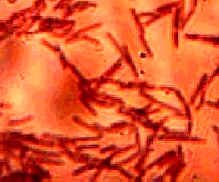 Treatment can lower ones immunity by decreasing the number and function of immune cells. Also, immune suppression is associated with the increased risk of lymphoma, and the disease itself can reduce immune competence and make one prone to invasive infection. Treatment can lower ones immunity by decreasing the number and function of immune cells. Also, immune suppression is associated with the increased risk of lymphoma, and the disease itself can reduce immune competence and make one prone to invasive infection.
Here we provide resources for serious infections related to late stage or advanced disease and associated with aggressive treatments.
It is particularly important for immune-compromised patients to avoid sources of infection, such as crowded public location, and to take other precautions. See Avoiding infection.
Symptoms of infection may include:
Fever, chills, shaking, lethargy, poor appetite, dizziness, confusion, inflammation,
sensation of heat, and organ-specific signs - mucous-producing cough, painful urination, and so on.
When in doubt, please notify your doctor.
Sepsis is a blood infection that can lead to shock and death. Symptoms may include: Fever (but sometimes normal or low temperature), chills, severe shaking, fast heart rate, rapid breathing, confusion, disorientation, agitation, dizziness, decreased urination, rash, and joint pain.
NIH: Guidance: Call your doctor right away
if you have any of these symptoms:
|
Fever over 100° F or 38° C.
|
|
Chills, especially shaking chills.
|
|
Sweating.
|
|
Loose bowel movements.
|
|
Frequent urgency to urinate or a burning feeling when you urinate.
|
|
A severe cough or sore throat.
|
|
Unusual vaginal discharge or itching.
|
|
Redness, swelling, or tenderness, especially around a wound, sore,
ostomy (surgical opening), pimple, rectal area or catheter site.
|
|
Sinus pain or pressure.
|
|
Earaches, headaches, or stiff neck.
|
|
Blisters on the lips or skin.
|
|
Mouth sores.
|
Source: Chemotherapy and You cancer.gov pdf
Resources on types of treatment-related Infection,
treatment and prevention:
|
OVERVIEW:
|
Managing Infections in Patients With Hematologic Malignancies
Medscape 2003 (free login req.) http://bit.ly/axtWSg
Initial Evaluation, Initial Management, Bacterial Infections,
Intravascular Devices, Community Respiratory Viruses, Fungal Infections
|
|
Fever in immunocompromised patients. nejm.org
|
|
|
Clostridium difficile
|
Associated Diarrhea http://bit.ly/zFQpTr
|
|
MICHAEL S. SCHROEDER, M.D., Kaiser Permanente, Fontana, California
Am Fam Physician. 2005 Mar 1;71(5):921-928.
Clostridium difficile infection (C-Diff) is responsible for approximately 3 million cases of diarrhea and colitis annually in the United States. The mortality rate is 1 to 2.5 percent. Early diagnosis and prompt aggressive treatment are critical in managing C. difficile–associated diarrhea.
|
|
Lancet, 2013:
Probiotics for C-diff in older inpatients (PLACIDE): a randomised, double-blind, placebo-controlled, trial http://bit.ly/17huIq9
Unfortunately, there was no evidence of benefit from probiotics compared to placebo in the large placebo controlled trial.
|
|
|
Gram-negative Bacteria niaid.nih.gov
|
|
Febrile Neutropenia - Br J Cancer. 2009 September:
Prevention of febrile neutropenia: use of prophylactic antibiotics
|
Febrile Neutropenia - Support Care Cancer. 2010 May:
Prophylaxis of chemotherapy-induced febrile neutropenia with granulocyte colony-stimulating factors: where are we now?
|
|
|
Fever and neutropenia related to chemotherapy by Chemocare
|
|
MRSA During Chemotherapy dontbeaschmuck.org
|
|
Preventing Infections after Bone Marrow Transplant clevelandclinic.org
|
|
Pulmonary infection, see below
|
|
Sepsis (a serious type of blood infection) emedicine
|
|
See also Complete Blood Count cc.nih.gov pdf | PAL
|
Return to top
Minimizing Risk of Infection
Return to top
Infectious Pulmonary Complications
 TOPIC SEARCH: Scholar TOPIC SEARCH: Scholar
"Pulmonary complications of cancer and cancer therapy represent a broad spectrum of disease. Early diagnosis and treatment are essential to achieve an optimal outcome." 2
Following Stem Cell Transplant:
"Despite the introduction of numerous prophylactic [preventive] strategies and advances in diagnosis and treatment, pneumonia remains the leading infectious cause of death after HSC transplantation.
... Factors that enhance the vulnerability of the recipient to pneumonia include protracted [long lasting] neutropenia [low immune cell count] before engraftment, impaired humoral [b-cell] and cellular [t-cell] immunity associated with the administration of exogenous immunosuppressive agents, and GVHD [Graft versus Host Disease]." 1, Page 33
Early recognition and correct treatment of the pulmonary complications should minimize the significant mortality and morbidity. This review aims to discuss the role of radiology in the diagnosis and management of pulmonary complications following BMT. 3
RESOURCES:
-
Pulmonary Complications of Solid Organ and Hematopoietic Stem Cell Transplantation http://ajrccm.atsjournals.org/cgi/reprint/170/1/22?ck=nck
-
Pulmonary complications in cancer patients.
CA Cancer J Clin. 1996 Sep-Oct;46(5):303-20. Review. PMID: 8806395
-
Pulmonary complications following bone marrow transplantation.
Br J Radiol. 2003 Jun;76(906):373-9. Review. PMID: 12814922
-
Managing Neutropenia: Topic Search http://bit.ly/cnRCwL
Return to top
Fungal Infections
Susceptibility to fungal infections can be a complication of immune suppression caused by treatment and the underlying disease.
|
NEW eMedicineHealth:
Candidiasis (Yeast Infection) Symptoms, Causes, Treatment - http://bit.ly/GRwvef
|
|
Use of Antifungal Combination Therapy: Agents, Order, and Timing http://www.ncbi.nlm.nih.gov/pmc/articles/PMC2889487/
|
|
Antifungal Treatment Delays Responsible For Excess Deaths From Fungal Infection: Presented at ICAAC
"Among patients who received effective therapy within 6 hours of hypotension onset, the in-hospital survival rate exceeded 60%, with no marked difference between types of infection. Survival rates for both fungal and bacterial infection decreased dramatically as treatment delays grew longer."
|
|
FDA Approves Novel Medicine to Prevent Invasive Fungal Infections FDA.gov 2006
The safety and efficacy of Noxafil were evaluated in clinical trials consisting of 1,844 patients between 13 and 82 years of age. In two, randomized, controlled studies of patients who had compromised immunity and were at high risk for invasive fungal infections, those patients who received Noxafil had comparable or lower rates of invasive Aspergillus and Candida infections than those patients who received other antifungal medications.
|
|
Aspergillosis MedlinePlus
Aspergillus, a fungus, "causes illness in three ways: as an allergic reaction in people with asthma (Pulmonary aspergillosis - allergic bronchopulmonary type); as a colonization and growth in an old healed lung cavity from previous disease (such as tuberculosis or lung abscess) where it produces a fungus ball called aspergilloma; and as an invasive infection with pneumonia that is spread to other parts of the body by the bloodstream (Pulmonary aspergillosis - invasive type)." ~ MedlinePlus
Fungal infection - Related PubMed Abstracts
|
Treating Fungal Infections
"Itraconazole and amphotericin B have at least equivalent efficacy as empirical antifungal therapy in neutropenic patients with cancer. However, itraconazole is associated with significantly less toxicity."
|
Rapamycin
This agent is under investigation as a treatment for lymphoma as well.
See rapamycin for PubMed abstracts.
|
|
Antifungal therapy for persistent fever in neutropenic patients with cancer who are receiving
broad-spectrum antibacterial therapy. A randomized, controlled trial PubMed
|
Return to top
Viral infections
Background Topic Search: Cytomegalovirus| Hepatitis | Shingles
treatment Topic Search: Cytomegalovirus | Hepatitis | Shingles
|
Also see Shingles - a viral infection that presents in the skin
|
|
Rituximab-related viral infections in lymphoma patients.
Leuk Lymphoma. 2007 Jul;48(7):1307-12. Review. PMID: 17613758
Close monitoring for viral infection, particularly HBV and CMV, in patients treated with
rituximab should be recommended.
|
|
Monitoring of cytomegalovirus reactivation after allogeneic stem cell transplantation: comparison of an antigenemia assay and quantitative real-time polymerase chain reaction Nature.com
|
|
Adoptive transfer of cytomegalovirus-specific CTL to stem cell transplant patients after selection by HLA–peptide tetramers jem.org
CMV viremia was reduced in every case and eight patients cleared the infection, including one patient who had a prolonged history of CMV infection that was refractory to antiviral therapy. This novel approach to adoptive transfer has considerable potential for antigen-specific T cell therapy.
|
|
Hepatitis B virus reactivation in a case of non-Hodgkin's lymphoma treated with chemotherapy and rituximab: necessity of prophylaxis for hepatitis B virus reactivation in rituximab therapy.
Leuk Lymphoma. 2004 Mar;45(3):627-9. PMID: 15160930 | Related articles
|
Return to top
Pseudomonas
|
Improved prognosis of Pseudomonas aeruginosa bacteremia in 127 consecutive neutropenic patients with hematologic malignancies. Int J Infect Dis. 1998-99 Winter;3(2):99-104.PMID: 10225988 PubMed
"recognition of the risk factors and more careful management, the prognosis of P. aeruginosa bacteremia in neutropenic patients with hematologic malignancies has improved in recent years.
|
|
Pseudomonas Related PubMed Abstracts
|
Research News
|
Cystitis: Successful treatment of severe hemorrhagic cystitis after hemopoietic cell transplantation by selective embolization of the vesical arteries. Bone Marrow Transplant. 2003 May; 31(10): 923-5. PMID: 12748670 | Related articles
|
|
Immunity and fungal infections Related PubMed Abstracts
|
|
T Cells Augment Monocyte and Neutrophil Function in Host Resistance
against Oropharyngeal Candidiasis iai.asm.org
|
Return to top
|

