TOPICS
What is it? | Terminology | How Might it Happen? | Abstracts by type
 TOPIC SEARCH: Google Scholar
Spontaneous regressions
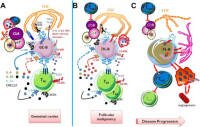 Spontaneous regressions are the observed decreases in tumor burden, which is relatively common in patients with indolent lymphomas.
Depending on the source, as many as 20% to 30% of patients will experience regressions at some time in the clinical course of their disease. This observed clinical tendency is also called waxing and waning.
The reasons for spontaneous regressions have not been identified and there may be different reasons in each case. The biology of the lymphoma varies and the interactions between the tumor and bystander cells in the tumor microenvironment are very complex and can vary for each of us - even when we have the same diagnosis.
-
The natural history of initially untreated low-grade non-Hodgkin's lymphomas.
N Engl J Med. 1984 Dec 6; 311(23): 1471-5. PMID: 6548796
Some Terminology:
Spontaneous regressions and spontaneous remission are sometimes used interchangeably, but these terms can have different meanings to different people:
Remission is most often defined as the absence of disease activity (stable disease), which is common in indolent lymphomas ...
... but remission is sometimes thought of and used to describe being free of observable disease -- or having no evidence of disease (NED).
... Spontaneous regression is often used to describe decreases in tumor burden that appear to occur spontaneously, without treatment.
The term waxing and waning is also used to describe the uneven course of lymphomas, particularly of the indolent (slow growing) types. Waxing means progressing, and waning means regressing.
Waxing and waning might be used to describe transient or short-term fluctuations in the size of lymph nodes that could be accounted for by inflammation and other factors unrelated to the actual number of malignant cells. Waxing and waning is similar to the daily fluctuations in the stock market that may or may not be related to longer trends.
Finally, how does one distinguish between waxing and waning and spontaneous regressions?
It may be that with spontaneous regressions there will be other signals that suggest true improvements in the state of the disease, such as improving blood counts, decreasing LDH, and observable improvements in how the patient feels and performs.
also see Remission, Response and Survival terms
Regressions are always welcomed by the patient, but this variable characteristic of the disease also makes it more difficult for investigators to evaluate new treatments - requiring larger numbers of patient in clinical trials.
How Might it Happen?
Here are some theories taken from the literature, with some layperson-speculation mixed in:
Immune recognition of the tumor cells may produce an immune response against the tumors, which could include the production of antibodies against antigen targets on the tumor, or NK cell direct killing.
Antigen in the body may influence the behavior of lymphoma cells which like normal lymphocytes may react to the presence or absence of stimulating antigens (pathogens, virus, allergens and so on)
Variation in the mutations within the tumor cells may cause some lymphomas to be more normal in their behavior - less likely to grow and persist; and more likely to regress.
Inflammation may account for waxing and waning of lymph nodes, which would mean that both the waxing and waning are not real indications of tumor progression or regression. If inflammation is caused by immune system activity against the tumor, real regression may happen as well for some people.
Hypoxic microenvironments (with low oxygen levels) may cause tumors to implode when necrotic (dead areas) form in the center. NOTE: It's also possible that low oxygen conditions can cause cells to adapt and become more aggressive or refractory.
Placebo Effect Stephen Barrett, M.D. - quackwatch.org
"Recovery from illness, whether it follows self-medication, treatment by a scientific practitioner, or treatment by an unscientific practitioner, may lead individuals to conclude that the treatment received was the cause of the return to good health."
Viruses may infect lymphoma cells as they do other lymphocytes, and thus make them more recognizable to other immune cells. This could be the mechanism behind the measles vaccine which is being studied in clinical trials for lymphoma.
Stress might raise levels of natural steroids and cause temporary regressions.


.gif)