|
Types of Lymphoma > Marginal Zone Lymphomas > MALT
Last update: 12/24/2016
|
|
TOPICS
Overview | Monitoring / Workup | Resources | Areas of Presentation | Monitoring | Treatment | Support Groups
Clinical Trials | Prognosis | Research News New: Antibiotic Therapy
 TOPIC SEARCH ~ PubMed: TOPIC SEARCH ~ PubMed:
Diagnosis | Review | Therapies | Prognosis | H Pylori | Refractory
|
Recent:
Results (encouraging) for phase II study of rituximab plus lenalidomide
for MALT
http://bit.ly/2hyuqqm
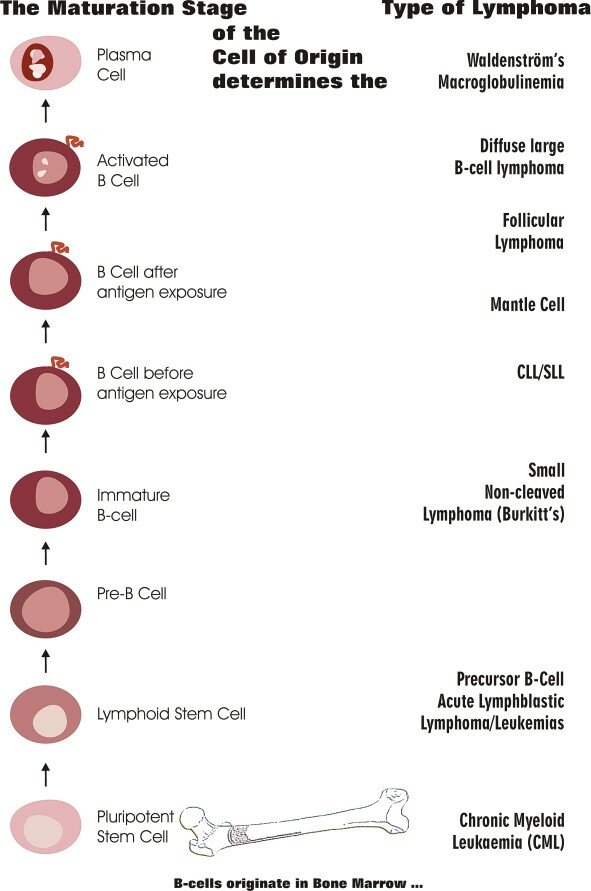
MALT is a lymphoma caused by abnormal mature b-cells. It is often managed similar to follicular lymphoma
What is lymphoma?
Lymphoma is a blood cell cancer - a condition where abnormal lymphocytes (a type of white blood cell) expand in number forming tumors often in lymph nodes but also in other regions, such as the bone marrow.
Lymphoma result when DNA damage or changes occurs to an immune cell (a lymphocyte) that alters the behavior of the cells.
The damage to DNA results in the abnormal production of proteins that prevents the cells from dying when they should, or causes sustained rapid cell division that produces more of its kind.
These malignant cells then may accumulate to form tumors that may enlarge the lymph nodes or spread to other areas of the lymphatic system, such as the spleen or bone marrow.
Lymphoma can also spread or first appear outside the lymphatic system -- and is called extranodal disease.
PAL depends on visitor support.
Please lend a hand:
Donate Your Used Vehicle Donate by Mail ...
|
MALT stands for Mucosa-Associated Lymphatic Tissue. It has been reclassified as extranodal Marginal zone lymphoma of mucosa-associated lymphoid tissue (MALT)-type. Also see Marginal Zone Lymphoma and Extranodal Lymphomas.
The management of MALT tends to be conservative ... treating as needed with lower toxic approaches. Observation (watchful waiting) is often recommended as treatment is not always needed at diagnosis and the condition tends to progress very slowly and can remain stable without therapy.
Gastric MALT that is positive for h-pylori infection may be treated with antibiotics.
Non- gastric MALT lymphomas are not associated with H. pylori and are treated using standard modalities that include radiation, chemotherapy, and monoclonal antibodies. See Treatment
Support Groups
.gif) |
Click to join MALT and MZL support forum
|
Go to messages
Moderation Policy
Outlook (prognosis) for MALT?
"The outlook for people with gastric [and other ] MALT lymphoma is usually good with about 80% of people surviving beyond the 5 year milestone and 77% going on to have disease free survival at 10 years. "
Source: Fact file: Gastric MALT lymphoma, March 2005
by Dr Andrew Wotherspoon (sorry, the fact file is no longer available)
What is the mucosa?
"The mucous membranes line various body cavities that are exposed to the external environment and internal organs. It is at several places continuous with skin: at the nostrils, the lips, the ears, the genital area, and the anus. The sticky, thick fluid secreted by the mucous membranes and gland is termed mucus. The term mucous membrane refers to where they are found in the body" Wikipedia.org
"Lymphoid tissue in the human body is associated with the mucosal system. This tissue, mucosa-associated lymphoid tissue (MALT), is scattered along mucosal linings and protects the body from antigens (non-belonging / invaders) entering along mucosal surfaces." emedicine | Picture it
Also see "The Mucosal Immune System" ncbi.nlm.nih.gov
for first-rate background on this aspect of the immune system.
Where might MALT present?
"Most low-grade gastric (stomach) lymphomas, and nearly half of all other gastric lymphomas, are marginal zone B-cell lymphomas.
Extranodal (outside the lymph nodes) marginal zone tumors may arise in the stomach as well as the lungs, eye sockets, intestines, [skin], thyroid, salivary gland, bladder, kidney, and even the central nervous system (CNS).
What is the Incidence of MALT?
"In the US: non-Hodgkins Lymphoma (NHL) represents approximately 4% of all malignancies in the United States. MALT lymphomas comprise approximately 5% of all non-Hodgkin's Lymphomas in the United States.
Internationally: According to worldwide literature, NHL accounts for 2-3% of all malignancies in the world and MALT lymphomas comprise approximately 5% of all NHLs.
MALT lymphoma occurs in people from all geographic areas and all ethnic and racial groups. Although extensive studies have not been performed, no apparent strong predilection exists for MALT lymphomas in any particular identifiable group. "
Source: emedicine.com
This type of lymphoma affects more women than men, and the average age at diagnosis is 65 years.
Common workup and monitoring of MALT
"The majority of patients are diagnosed with localized, early-stage (Stage 1 or 2) extranodal disease. Many patients have a history of autoimmune disease (disease caused by the body's immunologic attacks against its own tissues) such as Sjögren's syndrome or Hashimoto's thyroiditis, or bacterial infection of the stomach with Helicobacter pylori.
Note: Research findings suggest that antibiotic therapy for Helicobacter pylori infection may prolong remission in early gastric MALT lymphoma." Source: oncologychannel
Workup (adapted from NCCN Guidelines 2010)
|
Staging tests (see also below):
|
CT of Chest/abdominal/pelvic with contrast of diagnostic quality
|
|
Useful in select cases:
|
Endoscopic ultrasound
|
|
Bone marrow biopsy + aspirate
|
|
|
|
Physical exam:
|
Exam with attention to non-gastric sites (eyes, skin)
|
|
Performance status
|
|
B symptoms (patient reported)
|
|
|
Labs and tests:
|
If negative for H. pylori by histopathology,
do stool antigen, urea breath, and blood antibody tests.
|
|
CBC, differential, platelets,
|
|
LDH
|
|
Comprehensive metabolic panel
|
|
Hepatitis B test (if Rituxan considered)
|
|
Useful in select cases:
|
Hepatitis C test
|
|
|
|
Treatment, age and gender specific:
|
MUGA scan / echocardiogram"
(prior to anthracycline-based therapy)
|
|
Discuss fertility issues
|
|
Pregnancy testing in women of child-bearing age if chemo is planned
|
|
Staging
Staging refers to the how widespread the disease is.
The Workup section above provides the most common ways that staging is done for MALT. Extensive staging in patients with mucosa-associated lymphoid tissue (MALT)-type lymphoma can include:
Source: Extensive staging in patients with mucosa-associated lymphoid tissue (MALT)-type lymphoma ncbi.nlm.nih.gov
"The importance of extensive staging in MALT-type lymphoma is emphasized by the demonstration of multi-organ involvement in almost a quarter of patients. In addition, our data suggest that extra-gastrointestinal MALT-type lymphoma more frequently occurs simultaneously at different anatomic sites than MALT-type lymphoma involving the GI-tract."
Imaging tests are used to estimate the stage:
|
CT scans
|
|
MR imaging (MRI)
|
|
PET scans,
|
|
Gallium scans, and
|
|
Biopsies (bone marrow, endoscopy)
are commonly done to estimate the stage.
|
Conditions Associated with MALT
TOPIC SEARCH: ASCO | Medscape | Web
|
H-pylori: is associated with gastric MALT lymphomas (a definitive connection) See About H Pylori patient.co.uk
|
|
Helicobacter pylori: Epidemiology and Routes of Transmission http://bit.ly/113izUs
|
|
Sjögren syndrome: is associated with MALTomas of the salivary glands
See Sjögren Syndrome
|
|
Hashimoto thyroiditis: is associated with MALTomas of the thyroid.
|
|
Crohn disease or celiac disease: is associated with intestinal MALTomas |
"Continued massive antigen stimulation is postulated to represent a critical step in the development and progression of MALTomas."
Source: emedicine
"The list of microbial species associated with MZ lymphoproliferations has grown longer with molecular investigations and now comprises at least 5 distinct members:
|
MZL/MALT are often infection-associated, antigen-driven:
"H. pylori, C. jejuni, B. burgdorferi, C. psittaci, and hepatitis C virus (HCV), which have been associated with gastric lymphoma, immuno-proliferative small intestinal disease, cutaneous lymphoma, ocular lymphoma, and spleen lymphoma, respectively." *
Source: Infection-associated lymphomas derived from marginal zone B cells: a model of antigen-driven lymphoproliferation. Blood. 2006 Apr 15;107(8):3034-44. Epub 2006 Jan 5. Review. PMID: 16397126 | Related articles
|
Monitoring MALT with PET?
Monitoring MALT with MRI?
|
What is the Role Of MRI In The Follow-Up Of Patients With Primary Gastric Lymphoma? full text article ispub.com
Conclusion: "Contrast-enhanced MR imaging is effective for the precise extent of the disease and the follow-up of patients with gastric MALT lymphoma, even though it cannot detect flat mural lesions ((which is also a disadvantage of CT imaging)."
|
Resources and Reports on MALT
|
Goda - 2010 - Cancer (full text)
Long-term outcome in localized extranodal MALT lymphomas treated with Radiotherapy http://bit.ly/19LlMbW
Patients with localized (stage I/II) MALT have excellent clinical outcomes with moderate dose RT - and some may be cured.
|
|
Data on Relapse pattern for MALT lymphoma http://bit.ly/MALT-recur
|
|
MALT Lymphomas http://bit.ly/8A9xiY
Franco Cavalli, Peter G. Isaacson, Randy D. Gascoyne and Emanuele Zucca, 2001
|
|
Pathology and Biology of Gastric MALT PDF
|
|
Non-Hodgkin’s Lymphoma of Mucosa-Associated Lymphoid Tissue
Nov 2006 theoncologist Full Text
Seth M. Cohena,... St. Luke’s-Roosevelt Hospital Center, New York, USA; b Beth Israel Medical Center, New York, USA; c Continuum Cancer Centers of New York, New York, USA
Abstract | Intro | Definition and Classification | Molecular Characteristics | Clinical Features | Gastric MALT Lymphoma | Eradication of H. pylori | Nongastric MALT Lymphoma | Conclusions
|
|
PDF eBooks on Mucosa Lymphoma pdfpick.com
|
|
Fact file: Gastric MALT lymphoma, March 2005
by Dr Andrew Wotherspoon
(link no longer available)
The outlook for people with gastric MALT lymphoma is usually good with about 80% of people surviving beyond the 5 year milestone and 77% going on to have disease free survival at 10 years.
|
Other Resources
|
Molecular subtyping of gastric MALT lymphomas: implications for prognosis and management gut.bmjjournals.com
|
|
Non-Hodgkins Lymphomas - Clinical Practice Guidelines in Oncology – v.1.2006 nccn.org professionals pdf
|
|
About MALT: Emedicine.com
Also see: Patientcenter.com | CancerHelp.org.UK | Chulacancer.net PDF
|
|
|
|
Marginal Zone - Annals of Hematology:
Phase II trial of rituximab plus CVP combination chemotherapy for advanced stage marginal zone lymphoma as a first-line therapy
|
|
Marginal Zone Lymphomas:
Management of Nodal, Splenic, and MALT NHL Brad Kahl1 and David Yang2 asheducationbook
|
|
Review article:
The gastric marginal zone B-cell lymphoma of MALT type bloodjournal.org
|
|
MALT Diagnosis and Treatment Medscape (free login req.)
(Scroll down tp view section on MALT)
|
|
Lymphoma Diagnosis and Treatment: CHOP, MALT, PET, and More
Medscape (free login, req.)
|
|
What's "Hot" in Hematologic Malignancy: Extranodal MALT Lymphoma: If You Exclude the Stomach, What's Left?, Alexandra M. Levine, MD Medscape (free login req.)
|
|
Surgical Treatment of Gastrointestinal B-Cell Mucosa-Associated Lymphoid Tissue Lymphomas sma.org
|
|
Marginal Zone Lymphoma hmds.org.uk
Clinical Features, Laboratory Diagnosis, Cytogenetics, Transformation and Progression, and Outcome and Therapy
|
|
Extranodal MALT (non-gastric)
based on areas of presentation
|
Resources based on areas of presentation
|
OVERVIEW of non-gastric MALT
|
MALT Lymphomas - Radiological Spectrum of Disease
jradiology PDF
Good overview of areas of presentation.
|
|
Non-gastrointestinal MALT: prognosis discussion PDF
|
|
NCCN Treatment guidelines, page 29 (req. registration) www.nccn.org/professionals/physician_gls/PDF/nhl.pdf
|
|
See also MALT affecting the eye PAL
|
BONE MARROW
|
Bone marrow - comparative study of marginal zone lymphoma involving bone marrow. Am J Clin Pathol. 2002 May;117(5):698-708. PMID: 12090417 PubMed
|
BREAST
|
Stage I and II MALT lymphoma: results of treatment with radiotherapy.
Int J Radiat Oncol Biol Phys. 2001 Aug 1;50(5):1258-64. PMID: 11483337 PubMed | Related Abstracts
|
|
Breast Annals of Hematology
|
CUTANEOUS (skin)
"Cutaneous lymphomas often have a more indolent natural history than nodal lymphomas, and may require different therapeutic approaches. Clinical features are an important prognostic factor and should be utilized in guiding therapy. 1
"Primary cutaneous B-cell lymphomas have been associated with Borrelia burgdorferi, the spirochete responsible for Lyme disease. Recently, cutaneous marginal zone B-cell lymphoma has been proposed as a distinct clinical-pathological entity." 5
-
Cutaneous lymphomas: a proposal for a unified approach to classification using the R.E.A.L./WHO Classification. Ann Oncol. 2000;11 Suppl 1:17-21. Review. PMID: 10707773
-
Primary cutaneous marginal zone B-cell lymphoma: a molecular and clinicopathologic study of 24 Asian cases. Am J Surg Pathol. 2003 Aug;27(8):1061-9. PMID: 12883238
Cutaneous marginal zone B-cell lymphoma is a recently proposed entity and constitutes a cutaneous counterpart of extranodal marginal zone B-cell lymphoma of mucosa-associated lymphoid tissue (MALT). Borrelia burgdorferi infection has been suggested as a possible causative agent in European cutaneous cases of marginal zone B-cell lymphoma
-
Technical: mucosa associated lymphoid tissue lymphoma translocation gene 1 PubMed
This gene has been found to be recurrently rearranged in chromosomal translocation with two other genes - baculoviral IAP repeat-containing protein 3 (also known as apoptosis inhibitor 2) and immunoglobulin heavy chain locus - in mucosa-associated lymphoid tissue lymphomas.
-
Infection by Borrelia burgdorferi and cutaneous B-cell lymphoma.
J Cutan Pathol. 1997 Sep;24(8):457-61. PMID: 9331890
Our results may have therapeutic implications. In analogy to Helicobacter pylori-associated MALT-lymphomas, which in some cases can be cured by eradication of Helicobacter pylori infection, a proportion of CBCL may be cured with antibiotic therapy against Borrelia burgdorferi. Although yet speculative, adequate antibiotic treatment for patients with primary CBCL should be considered before more aggressive therapeutic options are applied, particularly in countries where infection by Borrelia burgdorferi is endemic. PCR analysis of Borrelia burgdorferi DNA is a fast test that should be performed in all patients with CBCL to identify those who more likely could benefit from an early antibiotic treatment.
-
Eradication of Borrelia burgdorferi infection in primary marginal zone B-cell lymphoma of the skin. Hum Pathol. 2000 Feb;31(2):263-8. PMID: 10685647
A nearly complete clinical and histological regression was observed after B burgdorferi eradication, with immunohistochemistry studies showing disappearance of plasma cell differentiation and a marked decline in the number of CD3+ T cells and Ki-67+ cells. Our case confirms the link between B burgdorferi and some cutaneous lymphomas.
Return to top
EYE (ocular)
|
Subtopic moved here: PAL
|
Return to top
FORESKIN
|
MALT Lymphoma of the Foreskin.
Leuk Lymphoma. 2004;45(8):1699-1701. PMID: 15370229 |Related articles
|
Return to top
GASTRIC (stomach)
"In the majority of people gastric MALT lymphoma is found during tests for persistent indigestion - although only a very small percentage of people with this symptom have lymphoma. The indigestion is probably more related to the presence of the Helicobacter than the actual lymphoma and patients are often symptomatically better following its eradication, irrespective of whether the lymphoma is decreasing (regressing).
A very few people go to their doctor with other symptoms including nausea and vomiting (possibly with specs of blood in the vomit) but severe abdominal pain or the finding of a mass in the abdomen are unusual." 1
-
Fact file: Gastric MALT lymphoma, March 2005
by Dr Andrew Wotherspoon lymphoma.org.uk
Highly recommended synopsis, but no longer available online.
-
Gastric MALT lymphoma: from aetiology to treatment.
Lancet Oncol. 2002 Feb;3(2):97-104. Review. PMID: 11902529 PubMed
Return to top
Musshoff - classification of gastrointestinal lymphomas
| IE |
Involvement of extralymphatic organs or tissue
|
| I1E |
In case of gastric lymphoma: Involvement of mucosa and submucosa
|
| I2E |
Gastric involvement surpassing stage I1E
|
| II1E |
Involvement of an extralymphatic organ including regional lymphknots, alternativly one further extralymphatic organ above or beneath the diaphragma
|
| II2E |
Involvement of an extralymphatic organ and of extraregional lymph knots, plus one additional localized involvement of an extralymphatic organ
|
| IIIE |
Involvement of an extralymphatic organ, additionally involvement of lymph knots above or beneath the diaphragma, including one further localized involvement of an extralymphatic organ or tissue, alternativly the spleen (IIIS) or both (IIIES)
|
| IV |
Diffus or disseminated organ involvement irrespective of lymph knot involvement
|
Return to top
HEPATIC (Liver)
|
[A case of MALT lymphoma of the liver treated by RFA and Rituximab] Nippon Shokakibyo Gakkai Zasshi. 2006 Jun;103(6):655-60. Japanese. PMID: 16800289
|
|
Primary low-grade hepatic B-cell lymphoma of mucosa-associated lymphoid tissue (MALT)-type. Am J Surg Pathol. 1995 May;19(5):571-5. PMID: 7726367
|
|
B-Cell lymphoma of the liver Related PubMed abstracts
|
|
Extranodal lymphomas associated with hepatitis C virus infection.
Am J Clin Pathol. 1998 May;109(5):600-9. PMID: 9576580
|
Return to top
LUNG - BRONCHUS-ASSOCIATED (BALT)
Related PubMed Articles PubMed
|
Lung (respiratory trac) BALT - Bronchus-associated lymphoid tissue.
Represents ~10% of all MALT and ~ 60% of all Primary Pulmonary Lymphomas.
Associated with Lupus erythematosa, Hashimoto thyroiditis, Multiple sclerosis, and Sjögren syndrome. Source jradiology PDF
|
Related PubMed Articles PubMed
NODAL ORIGIN
SALIVARY (PAROTID) GLAND
TOPIC SEARCH: PubMed
"Mucosa associated lymphoid tissue (MALT) lymphoma has been noted to involve the salivary glands in chronic inflammatory conditions such as Sjogren's syndrome and in HIV infection." 1
"Lymphoma arising from the parotid gland is exceptionally rare. Indeed, primary parotid lymphoma accounts for only 0.3% of all cancer diagnoses." 2
"In general, malignant lymphoma originating in the parotid gland is histologically described as low-grade non-Hodgkin's lymphoma, frequently belongs to the B-cell type and rarely relapses into other sites." 2
-
About Parotid Tumors emedicine.com
-
Diagnosis and Treatment of Malignant Lymphoma of the Parotid Gland jjco.oxfordjournals.org
Abstracts
-
MALT lymphoma presenting as a cystic salivary gland mass.
Head Neck. 2001 Mar;23(3):254-8. PMID: 11428457
-
Mucosa-associated lymphoid tissue lymphoma of the salivary glands occurring in patients affected by Sjogren's syndrome: report of 6 cases.
Acta Haematol. 2001;105(2):83-8. PMID: 11408709
-
Primary Salivary Gland Lymphoma: A Clinicopathologic Study of 23 Cases in Taiwan karger.com
Return to top
SINUS
TOPIC SEARCH: PubMed
Return to top
SPLENIC
Return to top
|
|
Monitoring / Imaging
Return to top
|
Monitoring / Imaging
|
Data on Relapse pattern for MALT lymphoma
http://bit.ly/MALT-recur
|
|
PET not judged effective for imaging of MALT: Positron emission tomography with fluorine-18-2-fluoro-2-deoxy-D-glucose (F18-FDG) does not visualize extranodal B-cell lymphoma of the mucosa-associated lymphoid tissue (MALT)-type
Annals of Oncology, Vol 10, Issue 10 1185-1189, Copyright © 1999 by European Society for Medical Oncology
http://annonc.oupjournals.org
|
|
Treatment
Also see:
Treatment of non-follicular NHL - PDF
Questions for your doctor
- Patients Against Lymphoma
General, Treatment & Side Effects, and Tests
Treatment Overview
ANTIBIOTIC THERAPY WHEN H-PYLORI-NEGATIVE
Hi everyone, .I very rarely post, but usually read the daily digest that comes in my e-mail. My husband was diagnosed with a malt lymphoma in his stomach almost two years ago. He was diagnosed at the University of Utah with jumbo biopsies and internal ultrasound. Our GI Dr. seemed a little leery about giving my husband the antibiotic treatment, but he did...and my husband has had no sign of the tumor since then. He had a follow-up gastroscope with ultrasound at the U of U in May. He also tested negative for H Pylori.....I think that there must either be a different bacteria involved, or the tests for H Pylori need a little perfecting!! I really don't think they are accurate...from all I've read!
~ DL (NHL-MALT)
I'm one of those who had conjunctival malt successfully treated with doxycyline; the treatment was based on the theory that antibiotics
were working for gastric malt (because of h. pylori), and the eye shares a similar mucuous membrane with the stomach; thus, the experiment with the doxycycline for conjunctival malt.
I think I was lucky to have a forward-thinking oncologist who was working with some young colleagues; they proposed the antibiotic treatment theory to me and it seemed to make sense. I figured I had nothing to lose and everything to gain if it worked, and thankfully it did. It certainly was a lot easier than the radiation I had to the other eye.
~ Sherri (nhl-MALT)
Return to top
|
TOPIC SEARCH:
All: ASCO | Medscape | Web
Antibiotics AND MALT: ASCO | Medscape | Web
Rituxan AND MALT: ASCO | Medscape | Web
Treatment Guidelines
|
NCCN Treatment guidelines for MALT, pages 23-32 www.nccn.org/professionals/physician_gls/PDF/nhl.pdf
|
|
Common Misconceptions in the Management of H-Pylori-associated Gastric MALT-lymphoma
Management of H. Pylori-associated Gastric MALT-lymphoma: Antibiotic Treatment Has No Role in the Management of H. pylori-negative MALT Lymphoma http://bit.ly/1iqPvxS
|
|
2016 July 27.
MALT lymphoma and Helicobacter pylori infection:
a review of diagnosis and management http://bit.ly/2bL07KX |
Factors that determine treatment timing and approach
The characteristics of the lymphoma at diagnosis as determined by the pathology report, and it's actual clinical behavior, and other factors determine the type of treatment and the timing of treatment you and your doctor will consider.
Treatment resources and reports
Overview:
|
Nongastric MALT Lymphoma / Marginal Zone Lymphoma - Treatment guidelines nccn.org
|
|
New Therapeutic Strategies for Non-Hodgkin's Lymphoma:
An Expert Interview With Dr. Richard Fisher - ASH 2000
"Histological regression of the gastric lymphoma after anti-helicobacter triple therapy was observed in 133 pts. (70%, 95% C.I., 63% to 77%) with 105 (55%) complete and 28 (15%) partial remissions. The median time to lymphoma regression was 7 months."
|
|
The primary gastric lymphoma: therapeutic strategies
Romeo Giuli MD
|
|
Treatment outcome of mucosa-associated lymphoid tissue/marginal zone non-Hodgkin's lymphoma. Int J Radiat Oncol Biol Phys. 2002 Mar 15;52(4):1058-66. PMID: 11958902 PubMed
|
|
Conservative treatment of primary gastric low-grade B-cell lymphoma of mucosa-associated lymphoid tissue: predictive factors of response and outcome. Am J Gastroenterol. 2002 Feb;97(2):292-7. PMID: 11866264 PubMed
|
Antibiotic Therapy
|
See new topic: PAL
|
First line Rituxan for MALT?
|
Clinical activity of rituximab in extranodal marginal zone B-cell lymphoma of MALT type. - full text bloodjournal.org
The overall response rate was 73% (95% confidence interval, 56%-87%), with 15 complete responses and 10 partial responses, and the response rate was significantly higher in the chemotherapy-naive patients, who had an 87% response rate compared with 45% of the previously treated patients (P =.03). The median response duration was 10.5 months. At a median follow-up of 15 months, 9 patients (26%) relapsed. The median time to treatment failure was 14.2 months in the whole series, but it was significantly longer (22 versus 12 months) in the chemotherapy-naive patients compared with those who had prior chemotherapy (P =.001). Most adverse events were of mild to moderate severity with no grade 4 toxicity. This study indicates that rituximab is safe with significant activity in MALT lymphomas.
|
|
Rituximab-induced remission of a gastric MALT lymphoma.
Leuk Lymphoma. 2004 Jun;45(6):1297-9. PMID: 15360017
|
Surgery for Gastric MALT?
"The treatment of gastric lymphoma continues to evolve, and surgical resection is now uncommonly a part of the initial management strategy."
|
The Diminishing Role of Surgery in the Treatment of Gastric Lymphoma. Annals of Surgery. 240(1):28-37, July 2004.
|
|
Utility of surgical resection with or without radiation therapy in patients with low-grade gastric mucosa-associated lymphoid tissue lymphoma Haematologica.org
|
Radiotherapy?
|
Localized Mucosa-Associated Lymphoid Tissue Lymphoma Treated With Radiation Therapy Has Excellent Clinical Outcome. J Clin Oncol. 2003 Nov 15;21(22):4157-4164. PMID: 14615444 | full text
|
|
Stage I and II MALT lymphoma: results of treatment with radiotherapy. Int J Radiat Oncol Biol Phys. 2001 Aug 1;50(5):1258-64. PMID: 11483337 PubMed | Related Abstracts
|
|
Clinical activity of rituximab in extranodal marginal zone B-cell lymphoma of MALT type. Blood. 2003 Jul 3 [Epub ahead of print] PMID: 12842999 PubMed
|
|
Clinical Trials
|
ClinicalTrials.gov searches by
Untreated | Relapsed | Not Transplant
|
Prognosis
|
Prognosis
"MALT-type lymphoma has a better prognosis than gastric lymphomas, because it tends to be localized for a long period of time. This has been attributed to its homing phenomenon in which the neoplastic cell tends to return to its original mucosal site rather than disseminate elsewhere - Primary Gastric Lymphoma, moffitt.usf.edu
"Few studies have investigated the relation between the location of MALT lymphomas and their prognosis. In contrast to the results referred by Thieblemont et al.,7 we found that the tendency to progress or relapse seemed to be:
more frequent in gastrointestinal than in non-gastrointestinal MALT lymphomas (22% vs 10%).
The longer time to progression showed by Thieblemont et al. for gastrointestinal lymphomas has not been confirmed in our study.
Although our data showed no significant differences in either disease free survival or overall survival between the two groups of patients, the slight survival advantage for non-gastrointestinal MALT lymphomas could be explained by their local involvement and good performance status at diagnosis.
It is possible that the single center nature of our study and the inclusion of only patients with unequivocal histologic criteria of MALT lymphoma, could have had some influence on the results." source: haematologica
Related Abstracts
|
Assessment of Disease Dissemination in Gastric Compared With Extragastric Mucosa-Associated Lymphoid Tissue Lymphoma Using Extensive Staging: A Single-Center Experience. J Clin Oncol. 2006 Jun 12; PMID: 16769982 | Free full text
Our findings suggest that MALT lymphoma frequently presents as a multifocal disease. Extragastric MALT lymphomas are significantly more prone to dissemination than gastric MALT lymphomas."
|
|
Predictive value of endoscopic ultrasonography for regression of gastric low grade and high grade MALT lymphomas after eradication of Helicobacter pylori. Gut. 2001 Apr;48(4):454-60. PMID: 11247887 PubMed
|
|
Immunological and molecular analysis of B lymphocytes in low-grade MALT lymphoma of the stomach. Are there any useful markers for predicting outcome after Helicobacter pylori eradication? J Gastroenterol. 2002;37(6):428-33. PMID: 12108676 PubMed
|
|
Comparative study of marginal zone lymphoma involving bone marrow. Am J Clin Pathol. 2002 May;117(5):698-708. PMID: 12090417 PubMed
|
|
Research News
|
Research reports and news
|
2016 July 27.
MALT lymphoma and Helicobacter pylori infection:
a review of diagnosis and management http://bit.ly/2bL07KX
|
|
Goda - 2010 - Cancer (full text)
Long-term outcome in localized extranodal MALT lymphomas treated with Radiotherapy http://bit.ly/19LlMbW
Patients with localized (stage I/II) MALT have excellent clinical outcomes with moderate dose RT - and some may be cured.
|
|
MALT - MedWire:
‘Excellent’ outcomes after H. pylori eradication for gastric MALT
|
|
Outcomes of Stage I/II Mucosa-Associated Lymphoid Tissue Lymphoma Reported cancerconsultants.com
"These authors concluded that radiation therapy played an important role in the curative therapy of MALT lymphoma. However, since 90% received radiation therapy, it is difficult [or impossible] to compare alternative therapies in this study. Nevertheless, radiation therapy appears to be an effective treatment for localized MALT lymphoma patients who have failed antibiotic therapy."
|
|
Update on MALT Lymphoma Medscape free login
Several interesting papers were presented concerning extranodal marginal zone MALT lymphomas. Approximately 75% of patients with Helicobacter pylori infection and localized MALT lymphoma of the stomach respond to antibiotic therapy, experiencing eradication of the H pylori and the lymphoma as well.
|
|
Treatment of extranodal marginal zone B-cell lymphoma of mucosa-associated lymphoid tissue type with cladribine: a phase II study. J Clin Oncol. 2002 Sep 15;20(18):3872-7. PMID: 12228207 PubMed
|
|
IELSG phase II study of rituximab in MALT lymphoma: final results Year: 2002 Abstract No: 1067
|
|
Stage I and II MALT lymphoma: results of treatment with radiotherapy. Int J Radiat Oncol Biol Phys. 2001 Aug 1;50(5):1258-64. PMID: 11483337 PubMed
|
|
Mucosa-associated lymphoid tissue lymphoma with initial supradiaphragmatic presentation: natural history and patterns of disease progression. Int J Radiat Oncol Biol Phys. 2000 Sep 1;48(2):399-403. PMID: 10974453 PubMed
|
|
Molecular follow-up in gastric mucosa-associated lymphoid tissue lymphomas: early analysis of the LY03 cooperative trial. Blood. 2002 Apr 1;99(7):2541-4. PMID: 11895791 PubMed
|
|
Of interest to pts with MALT: Randomized trial of endoscopy with testing for Helicobacter pylori compared with non-invasive H pylori testing alone in the management of dyspepsia BMJ 2002;324:999
|
|
The Modified International Prognostic Index Can Predict The Outcome Of Localized Primary Intestinal Lymphoma Of Both Extranodal Marginal Zone B-Cell And Diffuse Large B-Cell Histologies International Extranodal Lymphoma Study Group (IELSG) British Journal of Haematology, 2002, 118, 218–228 PDF
|
|
NEW Relapsed or refractory nongastric marginal zone B-cell lymphoma: Multicenter retrospective analysis of 92 cases.
Am J Hematol. 2009. PubMed - Related Articles
|
|
|