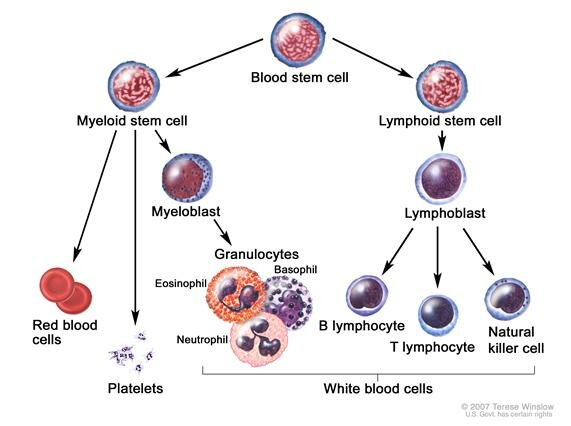
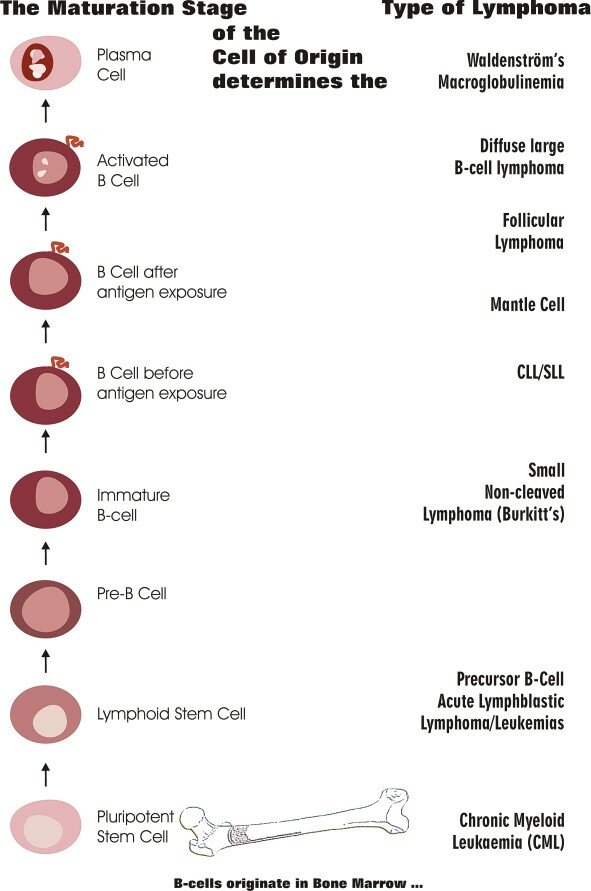
|
How do I get support without
feeling like I’m a failure at handling this?
Support Groups Make a Difference:
If you look, you will find a community of individuals who have been where you are now and who are willing to help you understand the many choices that you will face.
See the Support Groups page for a list of online support groups to which you can easily subscribe or unsubscribe with one click. The wisdom of many of those who have traveled this same road has been gained one step at a time, and these fellow-travelers will help you as you take those steps for yourself.
Do I have to be a ‘joiner’ or reveal everything about myself if I join an online support group?
You don’t have to be ‘a joiner’ to do this, because, while you can post questions by e-mail, it is perfectly fine to remain anonymous and just read what others are sharing (this is sometimes called ‘lurking’). Most members do not post, or do not post often.
Return to top
Lymphomas versus "solid" cancers
It's common to be diagnosed with lymphoma at an advanced stage (III or IV) and with bone marrow involvement. While this might seem alarming, you should know that advanced stages of lymphoma can be treated successfully, and that lymphoma in the bone marrow is as reversible as lymphoma anywhere in the body.
One way to understand this is to compare lymphoma with a so-called solid tumor, such as a prostate cancer. Here the cell of origin does not normally exist anywhere but in the prostate. So when you find malignant prostate cells in the lymph nodes, or in the bone marrow, you have a big problem. Compare with blood cells that we expect to move anywhere in the lymphatic or circulatory system, including the nursery for these cells, the bone marrow.
Another favorable aspect of blood cancers is that they are generally much more sensitive to treatment than "solid" tumors, probably because blood cells are more poised to self-destruct, and they can also regenerate more readily from stem cells in the marrow. Consider that the main side effect of chemotherapies is a drop in blood counts, but not the destruction of normal prostate or breast cells ...
We're not suggesting that lymphoma is not a life-threatening disease. It is. But we know that many types of lymphomas can be managed well, other types can be cured, and the potential to make additional progress against this family of diseases is real.
Incurable but treatable indolent lymphomas?
Carol Lee (a lay person with MALT lymphoma) explained:
In the case of low-grade lymphomas, the word 'incurable' does not mean what we would commonly believe. I think 'incurable' is usually associated with 'fatal', perhaps...can't be fixed, it's going to get you, etc. What 'incurable but treatable' means is that low-grade lymphomas can be treated along the way, with most people experiencing remissions during which the lymphoma is not at all active or causing any harm.
It is my understanding that (for now) it cannot be said that a low-grade lymphoma will be totally cured, because the cells divide so slowly that treatments can't get every last one of the little buggers, as they may with aggressive, rapidly dividing, cancer cells. But that does not mean that it can't be cured so you will die from it--as is true in other cancers, like metastatic cancers, for example, that can be treated but not finally cured and which are terminal.
I hope that makes sense. I also know when we first knew 'incurable' that was very frightening--mostly because of what that word means when applied to the other cancers.
Treatments are Getting Better, and the Best is Yet to Come
Please realize that very talented professionals and institutions are working to solve the problem of lymphoma, and that the experts are optimistic are truly optimistic that we will cure many more cancers and better manage others in the near future.
Aggressive lymphomas can be treated effectively and is often cured with standard therapies that have been improved, and will continue to improve.
Indolent (slow-growing) lymphomas—while generally not curable with standard therapies, there is much we can do to manage this form of the disease. Better therapies with lower toxicity are in development. New treatment agents like Rituxan that target specific receptors on malignant cells are available now. And many experts believe that we will be able to cure indolent lymphomas if not control it - as we would a chronic condition such as diabetes - now and even better in the near future.
NOTE: The five-year relative survival rate for non-Hodgkin's lymphoma patients has
risen from 31% in 1960 to 52% in 2001. - LLS
Improved survival of follicular lymphoma patients in the surveillance,
epidemiology, and end-results (SEER) program. ASCO 2004 ~ Abstract No: 6578
More New treatments
Aggressive combination treatments, such as CHOP and Rituxan, are producing durable disease free remissions and a hope for a cure in some patients with indolent lymphomas.
New treatments such as Bexxar and Zevalin can work as well as chemotherapy, without many of the wide-spread side effects associated with chemotherapy.
New agents and investigational immune-based therapies, such as Idiotype vaccines, are available to patients who participate in clinical trials. Additionally, research into identifying molecular targets in lymphoma give more reason to be hopeful.
Daily we read of advances in the science of understanding and treating lymphoma, which have already led to a growing list of promising therapies and targets for treatment and the National Biospecimen Network is sure to accelerate the rapid progress we have seen in just the last eight years: Rituxan, Zevalin, Bexxar approved, and many dozens of new and exciting treatment candidates under development and FDA assessment.
Return to top
Is there anything else I can do to help myself?
Life-Style Changes?
Many patients make life-style changes after diagnosis to help them tolerate treatments, improve their general health, to possibly slow progression or enhance treatment efficacy and safety, and to improve quality of life.
To help with these goals, we've created a Life style page, which includes information on natural medicine and diet. We include links to supporting studies so that you and your doctor can decide if a particular supplement or life-style change is safe and appropriate for you.
Return to top
Support > Patient-to-Patient Support or Getting Started >
Encouragement
Last update: 08/15/2016
|
 Encouragement . . . see also related resources below Encouragement . . . see also related resources below
 Probably nothing in life is more stressful than the diagnosis of a cancer, and it makes you wonder if we were meant to know (wired to know) too much about dangerous medical conditions - considering that for the majority of human evolution there were no diagnostic tests. Probably nothing in life is more stressful than the diagnosis of a cancer, and it makes you wonder if we were meant to know (wired to know) too much about dangerous medical conditions - considering that for the majority of human evolution there were no diagnostic tests.
What I think needs to be conveyed to the newly diagnosed (and their caregivers) is that blood cancers are generally more treatable and curable than other cancers. Lymphomas can be successfully treated and eradicated even at advanced stages.
Depending on the type and grade, a lymphoma may be cured or it may be managed well - treated as needed with less toxic and lower-risk therapies.
There are about 50 types of lymphomas, but the two main categories are indolent (slow growing) and aggressive.
The aggressive type (DLBCL, Burkitt's, etc.) is treated promptly with intent to cure. For the indolent type (follicular, MALT, etc.) the approach to treatment varies considerably - sometimes, but not commonly, treatment is never required.
Lymphomas are systemic conditions ... the cell of origin being a lymphocytes, an immune cells, which by design can migrate anywhere in the body to fight infection.
Normal lymphocytes react to an infection by increasing in number in order to disable a pathogen (bacteria, virus, fungus, etc). When the job is done, these cells self destruct or differentiate into other forms of lymphocytes. Indeed, when evaluating enlarged lymph glands it can be challenging for the pathologist to distinguish between benign (reactive) conditions and a lymphoma.
Lymphoma cells are abnormal lymphocytes that act similarly to lymphocytes reacting to an infection ... but have lost growth and persistence controls. These abnormal cells either grow too fast, or persist too long; their growth and persistence is independent of normal immune function, or at least partially.
 The good news is that lymphocytes (unlike other kinds of cells) are exquisitely sensitive to systemic chemotherapies and radiotherapy. The normal blood counts will drop in response to chemotherapy, even at low doses. The good news is that lymphocytes (unlike other kinds of cells) are exquisitely sensitive to systemic chemotherapies and radiotherapy. The normal blood counts will drop in response to chemotherapy, even at low doses.
Unlike other types of cells, there is a reserve of blood stem cells which can replenish the supply of blood cells after treatment, and these cells are less sensitive to the standard therapies for lymphomas.
 Unlike other types of cells, lymphocytes have different stages of maturation. This allows treatment to be focused on the features of the cells that are unique to the maturation stage of the lymphoma. Treatments targeting these features (such as cd20, cd19, btk ... and other pathways, can do so without impacting the other types of cells, other lymphocytes at earlier or latter phases of maturity, or the stem cells from which lymphocytes arise. Unlike other types of cells, lymphocytes have different stages of maturation. This allows treatment to be focused on the features of the cells that are unique to the maturation stage of the lymphoma. Treatments targeting these features (such as cd20, cd19, btk ... and other pathways, can do so without impacting the other types of cells, other lymphocytes at earlier or latter phases of maturity, or the stem cells from which lymphocytes arise.
I hope this overview helps to relieve your anxiety a bit. The reasons to be encouraged briefly described here are science- and evidence-based.
However, this is not to say that lymphomas are not life-threatening conditions ... they most certainly are, or can be.
... The risk of the lymphoma varies a great deal by the type. And within each type of lymphoma there is variation in how the disease behaves and responds to the same therapy.
For example, follicular lymphoma in some cases (not most) never requires treatment.
Unlike many other types of cancers, current therapies can be very effective, sometimes curative, and the outlook for additional clinical advances (See targeted investigational agents) is genuinely bright.
Karl Schwartz (President, Patients Against Lymphoma)
The Shock of Diagnosis:
The diagnosis of cancer and setbacks in treatment can sometimes trigger the following strong feelings and emotions:
.gif) |
Shock, and disbelief
|
|
Paralyzing fear and anxiety of the future
|
|
A preoccupation with the word "cancer"
|
|
A heightened awareness to any physical aches and pains
|
|
Grief for what is thought to be the loss of your life goals and plans.
|
|
Concern about the unspoken and yet obvious reactions of others who know of your diagnosis
|
|
Becoming overwhelmed by the enormity of decisions to be made, some of which must be made very quickly
|
|
Feelings that this is unfair to yourself and to your loved ones
|
|
Confusion and lack of control and feelings of uncertainty
|
|
Must I keep a positive outlook?
|
I believe that there is no one right way to cope with all of the pain of living.
As an academic psychologist, I know that people have different temperaments,
and if we are prevented from coping in our own way, be it "positive" or "negative," we function less well.
Barbara Held (A Positive Outlook is Overrated)
I hate when people try to blame the patient so it's good to know we don't
have to stay positive all the time or risk dooming ourselves to an earlier demise.
That being said, I believe there are lots of pluses to trying to stay positive as much as possible.
I figure that cancer may eventually take me (notice the word may, I'm still not willing to
treat it as inevitable, still hoping to die in my sleep when I'm an old lady).
If I waste today worrying about that future then I'm wasting the time I know I do have--now.
At the end of my life I don't want to look back and see that I let cancer steal the time that I did have.
That doesn't mean that I don't have the occasional melt-down pity party.
So it's good to know that those moments aren't going to hasten my departure.
--------------------
Sylvia
But Shock and Disbelief often Subsides ...
The diagnosis of cancer is impossible to describe to others ... who have not experienced it.
It takes your breath away, and you may feel that you are drifting away from the world.
Events, sounds, and the day-to-day preoccupations of life may lose meaning.
The sadness and confusion you feel can be overwhelming ...
as you grieve the loss of your dreams and expectations.
Please know that these feelings are normal and that they will subside when
you learn about your disease ... and begin to realize
that life can be rewarding, full, and enriching after the diagnosis.
Indeed, many patients report finding themselves through the experience.
But this ‘good news’ will take some time.
- Karl Schwartz (caregiver) & Carol Lee (survivor)
Individual prognosis is not based on statistics
The purpose of statistics is to find the average results and trends in LARGE groups. Further, statistical calculations are based on therapies used in the past.
Survival statistics should not be confused with an individual's prognosis, which is based on unique clinical factors, such as your age, type of lymphoma, where it is in the body, the underlying biology, and the response to different kinds of therapies.
Fortunately, for lymphoma a different class of therapy can be effective when the first treatment does not work optimally. Cure and or achieving a durable remission can remain feasible and a realistic goal, even after multiple relapses. Initially and sometimes at relapse the indolent types of lymphoma may not require any therapy, because they can grow very slowly without causing symptoms.
See also Jay Gould's essay: The Median isn't the Message
Return to top
|
Encouraging Reports
Follicular Lymphoma
|
Sometimes treatment is held back (watch and wait). Most persons diagnosed with FL will live a normal lifespan.
The Roadmap Forward in Follicular Lymphoma: Time for a Precision Approach | ASH Clinical News http://bit.ly/1Q5Oijm |
Diffuse Large B-cell Lymphoma
|
Treated promptly at diagnosis with curative intent - a goal that is often achieved.
Event-Free Survival at 24 Months Is a Robust End Point for Disease-Related Outcome in Diffuse Large B-Cell Treated With Immunochemotherapy http://bit.ly/2bv6IvZ
|
|
The report section is under construction |
|
Related Articles and Perspectives
"When a patient finds true hope, it's very different than optimism."
|
Carol Lee on adjusting to the diagnosis
From Despair to Peace |
Positive Thinking
Also read:
|
Musings of a Distractible Mind:
Thoughts of a moderately strange (yet not harmful) primary care physician.
Beautifully written. I expect this piece will resonate with patients and experts alike. |
A Letter to Patients With Chronic Disease |
Andrew J M ... poetic allegory
|
the resolving of fear stemming from the diagnosis of MALT lymphoma
|
Paul Klein ... sage advice & humor |
Who gets cancer? Why me!
10 Commandments for Cancer Survival
|
| Positive thinking? |
The Tyranny of Positive Thinking PDF
I got really depressed when people said I should think positive. I thought, "If that's what I have to do to survive, I'm never going to make it."
Barbara Held on
A Positive Outlook is Overrated NPR
|
Author: Unknown
Cancer is so limited...
Remembering always, LovesToRead
|
It cannot cripple love.
It cannot shatter hope.
It cannot corrode faith.
It cannot eat away peace.
It cannot destroy confidence.
It cannot kill friendship.
It cannot shut out memories.
It cannot silence courage.
It cannot reduce eternal life.
It cannot quench the Spirit. |
| Support groups & Patient stories & Help |
Support Groups Make a Difference | Subscribing to Groups Page
Patient Stories
Anxiety & Depression -
PAL's Psychosocial support Topic
Living with the "beast" - Tips, Patients Helping Patients
Ken: having this type of cancer isn't "THE END"
|
| Encouraging Treatment Developments |
Lymphomas versus solid cancers
Incurable but treatable indolent lymphomas?
Research has and is continuing to making a difference
Tarzan - Another vine waiting for me
|
| Essential reading |
|
Kevin Berry guidance called - Unpanic
1. Stop Panicking
2. Activate Your Network
3. You Are In Charge
|
|
Jay Gould's encouraging essay:
The Median isn't the Message |
|
|
|